Tuesday, April 23, 2024

Ozarks: Lizards, snakes, and Jesus

 Conveniently located along the Bible Belt (pause added for effect), the Ozarks is one of the most awe inspiring physiographic regions in the United States.  It contains some of the oldest landforms in the country and is home to an astounding number of plant and animal species.  Its rocky glades and cool forests beckon the adventurer.  I was fortunate to spend a weekend exploring the southern portion of the Salem Plateau in Missouri with Peter Paplanus and the experience was nothing short of revitalizing.

An Ozark glade

I agreed to meet Peter at his house but hiked a local trail while waiting for him to arrive.  Carefully scrambling along a steep riverbank lined in discarded slabs of concrete, I found a common gartersnake (Thamnophis sirtalis) here.  When I saw Peter minutes later, I jokingly bid him adieu as I had met my quota.  In all seriousness, the trip had only begun.


We headed southwest from St. Louis toward our destination and figured that since we had a couple of hours’ worth of daylight left, we’d stop at a glade to search for snakes before continuing our journey under the cover of darkness.  It was a good decision on Peter’s part as the view from atop the glade was amazing.  We also found a few nice snakes. On the way there, while driving up a curved narrow road through some open woodlands, a dead carcass fell out of the sky about ten feet in front of my car, followed by the large golden eagle that dropped it. Apparently the bird was having some difficulty gaining altitude with what Peter thought was a large rabbit. It flew to a tree and perched there, likely waiting for the coast to clear before returning to its victim.


Yellow-bellied racer (Coluber constrictor)

Large rock with rich crystal deposits throughout


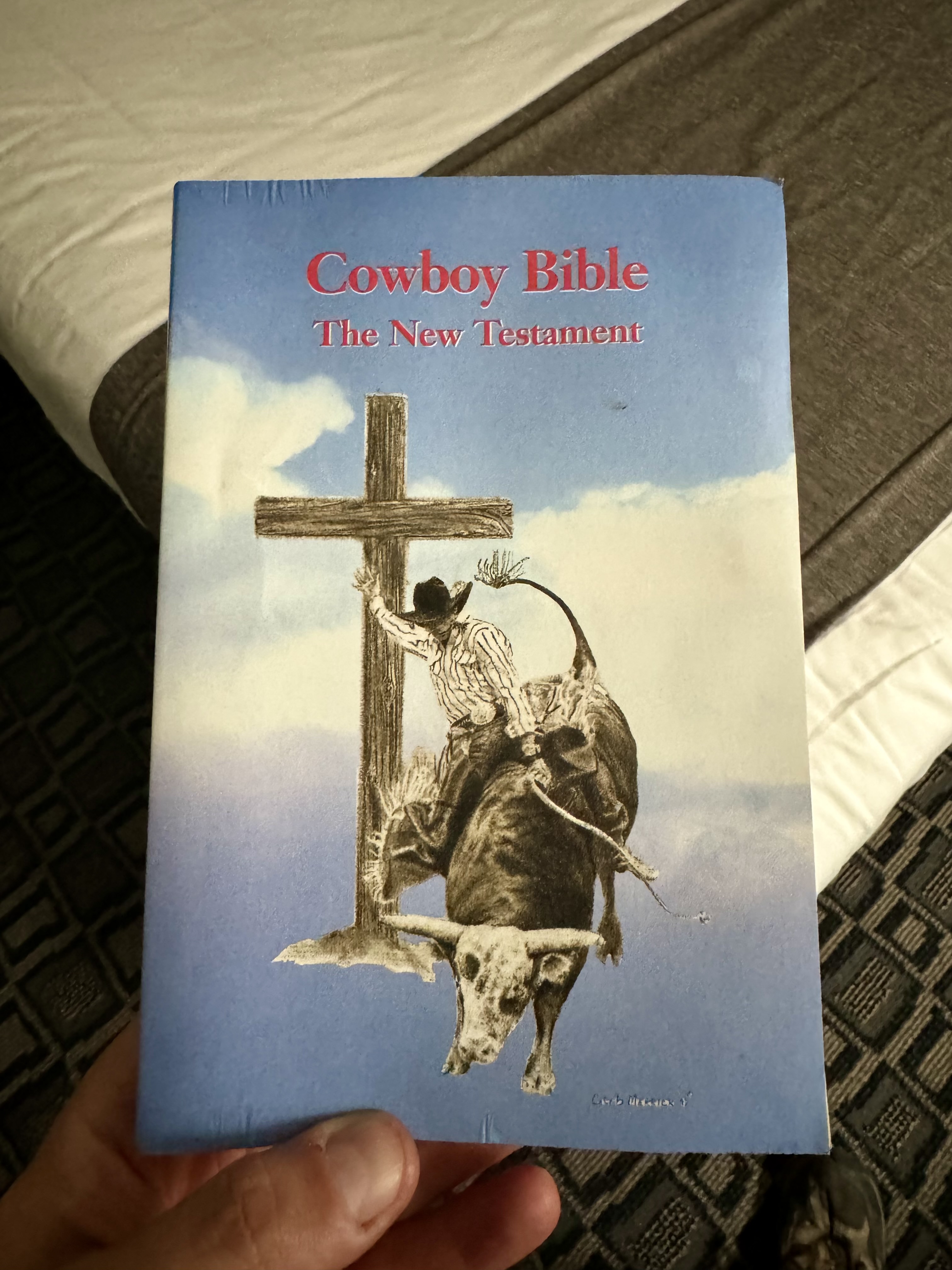
After being turned away from a couple of hotels in the area, I found a locally owned place that had room for two rough looking scoundrels.  Walking into the lobby, we were surrounded in Biblical quotes, crucifixes, and lots of other symbols both from the Old and the New Testament.  It’s important to note that we were the youngest tenants by at least several decades.  Our room was fairly nondescript except for a well-used and proudly propped copy of the “Cowboy Bible”. 


We got up very early the next morning and made our way to the first site.  With temperatures in the mid forties I was not hopeful, but Peter assured me we’d be successful.  We were joined by Peter’s friend Greg, a local who had years of experience in these areas.  Pete was right - it didn’t take long before we began finding reptiles here.  A good variety of lizards and snakes were represented.


Scarlet paintbrush
Rough earth snake (Virginia striatula)
Speckled kingsnake (Lampropeltis getula)
The same spec
Looking east across the Ozarks


Greg and Peter suggested that we move to a nearby site for a chance at finding the variable ground snake (Sonora episcopa).  A long hike through a mature deciduous woodland brought us to an isolated glade teeming with reptiles.  By now the temperature had risen to about sixty-four degrees F.


Young racer
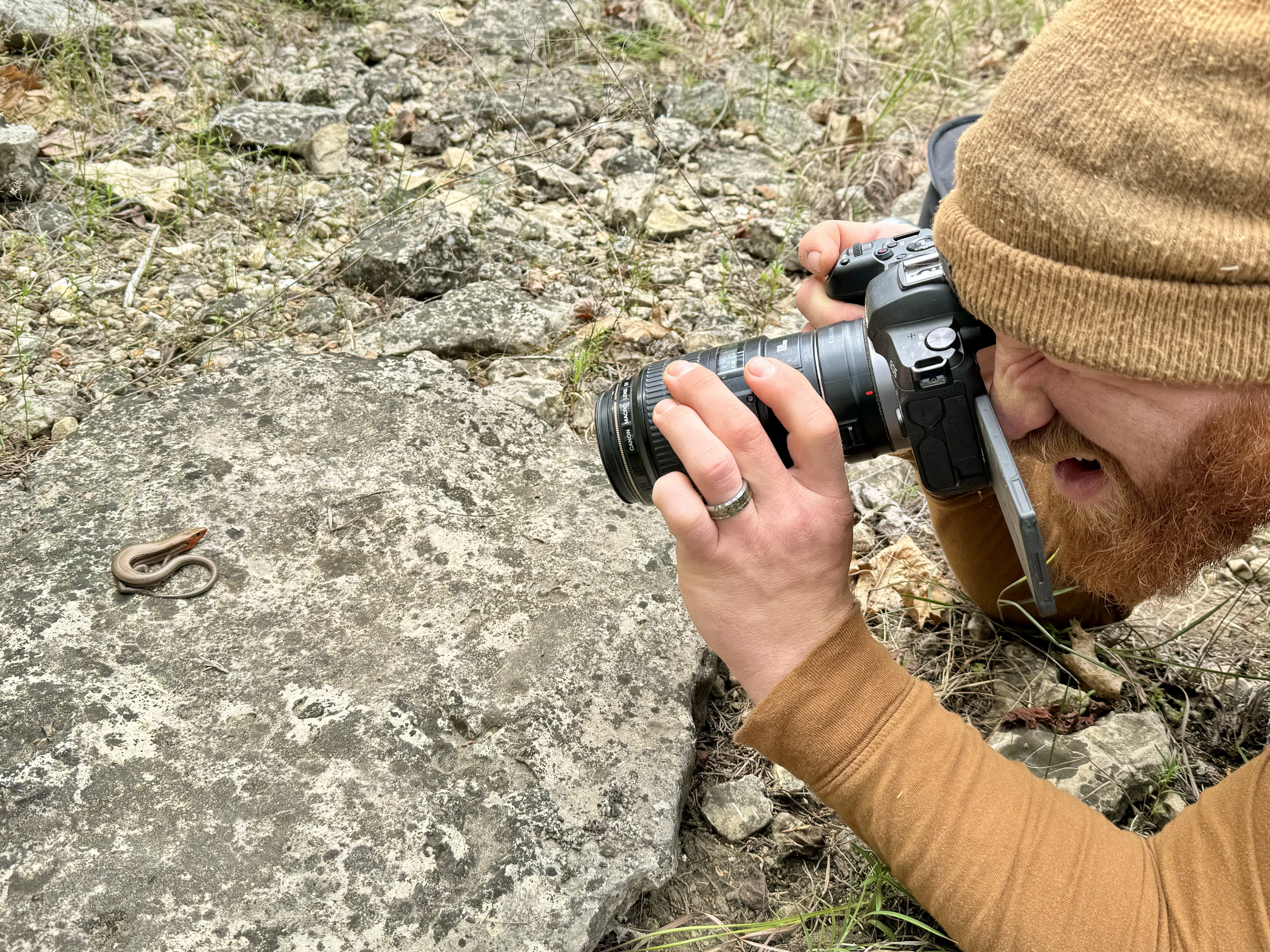
Peter photographing a coal skink (Plestiodon anthacinus)
Coal skink

Three-toed box turtle (Terrapene carolina)
Last year's hatchling speckled kingsnake


Young tarantula
Variable ground snake (Sonora episcopa)


Our next and final location was about a thirty minute drive away.  A small but intact section of glades that produced even more species and a vista complete with a waning westerly sun and a cool breeze to signal an end to the trip.

Wild hyacinth
One of many super duper little flathead snakes (Tantilla gracilis)
Greg and I after we found two western wormsnakes (Carphophis vermis)
One of several milksnakes (Lampropeltis triangulum)
Another ground snake
While taking a break (I am getting old), I found this beautiful American toad (Anaxyrus americanus) and had a nice little chat.  The conversation was rather one-sided.
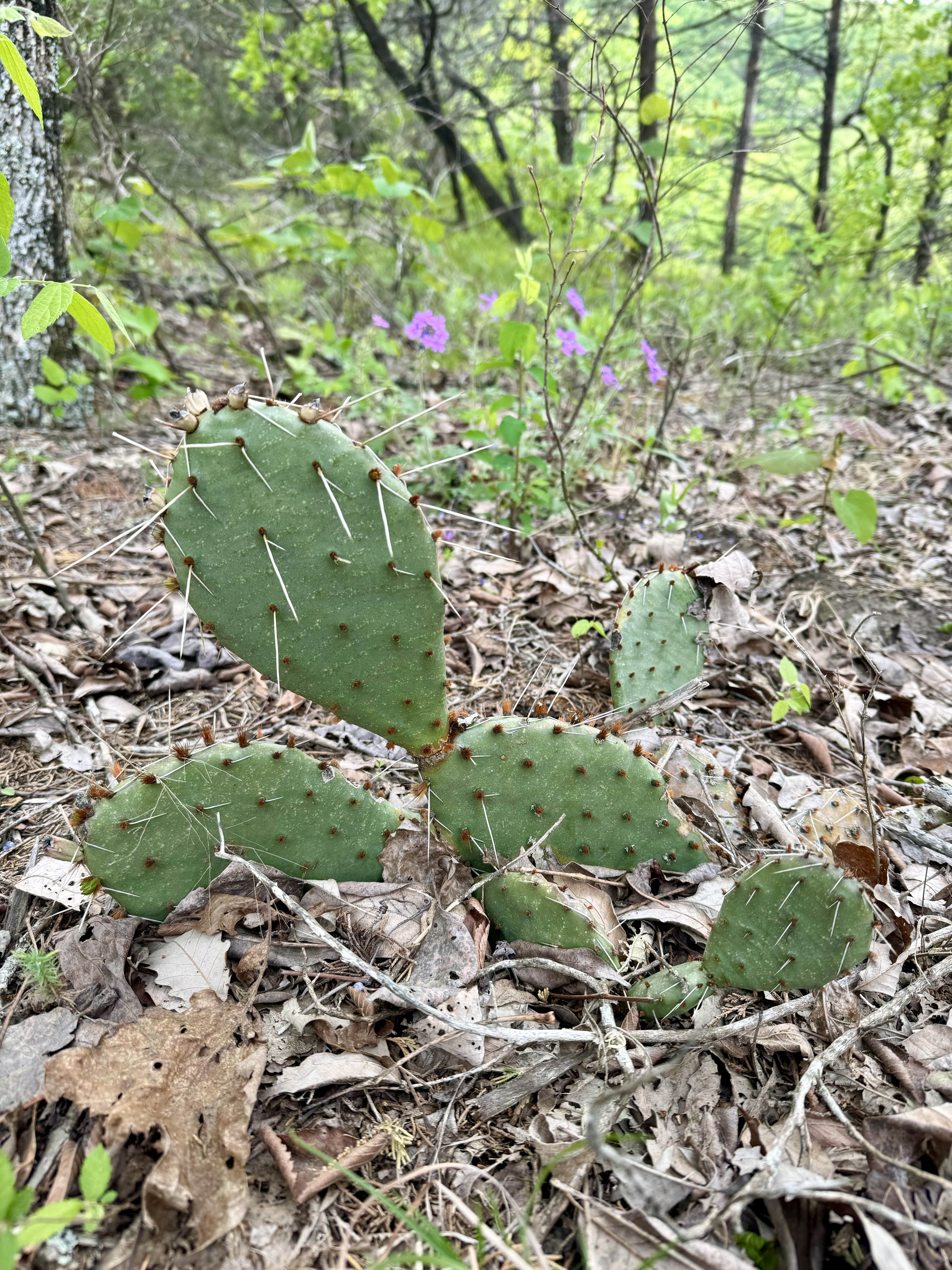
Opuntia
Pete, Greg, and me as we were wrapping up our very long outing.


Wednesday, April 3, 2024

Arizona: When life hands you lemons

 Cool air, stiff winds, and frequent rain accompanied my latest trip to southern Arizona.  Look, when you book a trip in advance, you can’t choose the weather.  You take what you get.  That said, it was a bit insulting when the weather was warm and sunny leading up to the trip, and then warm and sunny the day after we left.  So, lots of comfortable hiking and scenic views but very little wildlife.

The first stop of our trip was to the Arizona-Sonora Desert Museum.  As the name implies, it is a museum celebrating the Sonora Desert and all of its natural splendor.  Much of the museum is actually an outdoor walkway through various reconstructed desert biomes.  Among several species of lizards seen was the famous introduced hybrid spinytail iguana (Ctenosaura conspicuous X C. hemilopha macrolopha).  These impressive lizards were introduced to the grounds of the museum back in the 1970s for one reason or another and appear to be restricted to these grounds despite being adapted to live in the desert.  A docent I spoke to believes that the iguanas stay put because of the endless resources on hand (lots of water, fresh vegetation, and abundant artificial rock structure).  In spite of this, the museum has (or had) plans to sterilize these iguanas in order to curtail reproduction and eventually to eradicate them.  That was ten years ago so either they failed to catch all of the iguanas or they just decided that the lizards were too big a draw for visitors.

A majestic spinytail
Two iconic birds of the Sonoran Desert - white-winged dove (foreground) and Gambel's quail

We then hiked Madera Canyon.  This is about when the temperatures took a nosedive.  Madera Canyon is famous for its biodiversity, but little of that was apparent that day.  Still, the views are breathtaking and the little creeks are fun to play around, especially if you’re a seven year old kid.


Our hotel was located in the Catalina foothills near Sabino Canyon.  A short walk outside the hotel led to a desert wonderland complete with an eighty-foot waterfall and towering saguaros.  From here, the sunset is well worth the short hike.


We hiked several miles of the Ventana Canyon trail in intermittent drizzle.  The habitat looked so good for garter snakes - and I looked - but none were found. 


Arizona lupine
What a dreamy rock. I mean, look at it.

One particular cactus attracted us from the foothills to way out in the low desert.  “Shiva”, as it is known, is a saguaro with at least 78 arms, located outside of Tucson.  As a family we love saguaros but this one takes the cake. Within the vicinity of Shiva (and other saguaros impressive in their own right) we saw and flipped lots of dry cow pies.  As a kid, I’d flip cow pies in northwestern Georgia and find ringneck snakes, narrowmouth toads, and cool bugs.  Though stinky, the cow pies hold in a lot of moisture which can be hard to find during certain times of the year (especially in the desert).  After flipping about two hundred cow pies, and marveling at the cacti, we got back in the car to head to Mt. Lemmon.  Before too long, I spotted a wooden board along the side of the road.  I pulled off and flipped it, finding my first and only snake of the entire trip (?!?!), a young Sonoran nightsnake (Hypsiglena chlorophaea).

Shiva


Onward toward Mt. Lemmon.  The drive up the mountain is surreal.  For the first 5000 or so feet, the mountain is generally desert-like, but as you ascend further, the familiar agaves and prickly pears give way to pines, and before long, small patches of snow were seen along the roadside.  Around 6000 or 7000 feet, you’ve entered winter (in March).  Postcard images of families sledding down the snowy wooded hillsides and spectacular views of the valley below flashed before our eyes as we approached the village of Summerhaven, roughly 8000 feet in elevation.  We exited the Jeep as a gentle heavy snow began to fall and made our way to a couple of shops.  

I wanted to check out a trailhead that I had noticed on the way in, so after our snacks at a local snack shop, I drove a short distance north of town to the Oracle Ridge Trailhead.  This is an exposed area, prone to high winds, and boy did we get it.  I insisted on getting a view northwest into the canyon and climbed atop a pile of dirt at the edge of the small loop parking area.  A huge gust of wind hit all three of us, knocking my hat off of my head and chilling us to the bone.  Even though the temperature stood at twenty nine degrees F, the wind chill was a bone-chilling zero degrees F.  With only hoodies protecting our bodies, we quickly turned back toward the Jeep, and made our way back to the desert, which by then had reached sixty degrees.  For a lot of people this kind of experience is mundane but for us it was pretty stinkin’ wild.


Molino Canyon


Another memorable highlight was a visit to Colossal Cave Mountain Park.  All three of us love caves to varying degrees.  My wife loves big, showy, and easily accessible caves.  While I too enjoy these, I really like getting wet and dirty.  Colossal Cave offers both opportunities, but we opted for the shorter guided tour.  The cave is steeped in history and is still used by bats and other wildlife.


Our final adventure was a trip through a pretty well-known canyon north of Madera.  

Kind of a well-known spot
John and Kathie's new pup, Aripo.  He and Lumen bonded in no time and she still talks about him every day.

It was a fun trip, but I feel a little like we need a do-over with warmer weather.  Maybe in August - we’ll see.


Friday, March 8, 2024

The Illinois chorus frog

 The unseasonably mild wind whipped across the barren soybean field as we trudged our way toward what we thought was the location of a calling Illinois chorus frog (Pseudacris illinoensis). A mild sense of paranoia had befallen me.  After all, we were four suspicious individuals trespassing across someone else’s property in the dead of night, and my limited experiences with rural landowners has shown that they can be fiercely protective.  Guided only by the dim moonlight, Matt took the lead.  Following a three hour drive and fueled by adrenaline, the youthful fifty-year-old had his sights set for what looked like a small marsh on the other side of the ag field.  His kids, son Alan and daughter Anya, followed - Alan with a somewhat more enthusiastic gait than his sister.  And then there I was, trailing the caravan of hopeful frogophiles, using Google maps on my phone to help guide the group.  Each time I unlocked my phone I was a little worried that an adjacent landowner was going to spot us from a mile away.  But all of that concern quickly dissipated as we arrived at a deep, man-made pond along a dark tree line - the origin of the frog we had heard calling a quarter of a mile or so away.


There are a handful of Illinois anurans that can motivate me to go through such measures to find them.  Crawfish frogs, for which I am 0 for 2.  Narrowmouth toads and spadefoot toads round out the rest of the group of rare, secretive frogs that are only “easily” observed during their brief breeding seasons.  The Illinois chorus frog might be the least known of the group.  Much of what is known of the species in Illinois (where the bulk of their occurrences is) comes from Ellen Beltz’s “Distribution and status of the Illinois chorus frog, Pseudacris streckeri illinoensis, in Cass, Menard, Morgan, and Scott Counties of West-central Illinois” (1993).  In this paper, Beltz states that the frog was found in only nine Illinois counties, with the core metapopulation situated along the Illinois River.  During the last glacial period (about 14,000 years ago but possibly even more recent), retreating glaciers formed sandy ridges and other similar features in the Illinois valley.  Later, the gradually warming climate spurred northerly and easterly migrations of many plant and animal species from the south and west.  But, very recently in a geologic sense, the climate cooled and became wetter, causing major changes to the landscape.  Some isolated sandy areas remained, and with them a collection of unique xeric-adapted species such as the prickly pear cactus, the western hognose snake, and the Illinois chorus frog.  


Unfortunately, much of the original sand areas in Illinois have been destroyed.  River channelization and row crop agriculture are to blame.  Only small, disjunct fragments of intact sand areas remain in central Illinois, threatening the long term survival of this species as well as several others.


Morphologically, the Illinois chorus frog stands out among its peers.  Unlike the western (or boreal, whichever you want to run with) chorus frog and spring peeper with which it shares its habitat with, the Illinois chorus frog is robust.  Meaty, as I like to say.  At only an inch to an inch and half in length, it is a small frog.  However, it boasts the most impressive Popeye forearms.  It uses these guns to burrow down into the sand, where it spends most of its life.  During the 1970s, the late Lauren Brown (RIP) discovered that the Illinois chorus frog even feeds underground, which is a fascinating adaptation to living a fossorial lifestyle.  Most frogs burrow or create divots using their muscular hind legs, and feed above ground.  What a rebel!

Illinois chorus frog

The call of the Illinois chorus frog is distinctive.  It’s kind of like a deflated spring peeper.  It is unmistakable among the other species of Psuedacris it shares its breeding ponds with. 


Amphibian aficionados can hardly wait until March, when the first frogs emerge from their winter dormancy and congregate in breeding pools to ensure the future of their own kind.  Pseudacris are early breeders, although some species can remain reproductively active for months (I have recorded chorus frogs near Chicago calling well through June).   As the Illinois chorus frog is very selective about its habitat, more effort is required to locate them within their range.  This usually involves driving around at night with the windows down, trying to pinpoint the frogs’ locations and then figuring out how to actually get to them on foot.

Spring peeper

Illinois chorus frogs occur on protected land, but many of them breed in livestock ponds, low areas around ag fields, and roadside ditches.  It is in these latter locations we like to document them.  But hearing the frogs is one thing - circumventing their ventriloquy is another.  These things can make you nuts. Sometimes it feels like a snipe hunt.  You hear a few frogs and you are confident that you are approaching them.  Then, the wind shifts and now they sound like they are behind you.  You turn back with a puzzled look on your face (don’t worry, it’s really dark and no one can see), only to realize you’re being bamboozled by an animal smaller than your thumb.  Eventually you’ll figure it out and you’ll reach their pond, or ditch, or whatever it is they have decided to procreate in.  And then all of the effort will have been worth it.

Western (or boreal) chorus frog I nearly stepped on
Plains leopard frog

When Matt, Alan, Anya, and I finally reached the pond, we could hear a few frogs calling - a single Illinois chorus frog along with western (or boreal) chorus frogs and spring peepers.  A lone plains leopard frog that had been floating around submerged and worked itself down into the sandy muck at the bottom of the pond.  Within minutes we spotted one of the Illinois chorus frogs, a beautiful male clinging to a bit of floating vegetation.  I marked its exact coordinates for an ongoing study and took notes of its surroundings.  Then we were all able to photograph the frog in-situ.  A lot of herp enthusiasts like to reposition or pose their subjects, and while I’ve been guilty of this at times, most often there is no need to do this with frogs.  Besides, disturbing these frogs is looked upon poorly.  As a state-threatened species, it’s technically illegal.  So kids, if you ever find a Illinois chorus frog, or any listed species, kindly keep your paws off.

Alan with a found cow skull

After we zig-zagged our way back to the car, we did visit a few other nearby ditches, and heard a couple more frogs.  But the breeding season is just gearing up - more rain is really going to get these guys going.  As I write this five days after the jaunt, it’s raining pretty steadily throughout the state and I imagine that tonight, the sandy ditches and ponds in central Illinois are going to erupt.

Wilson's snipe