Wednesday, September 5, 2012

Two Dogs

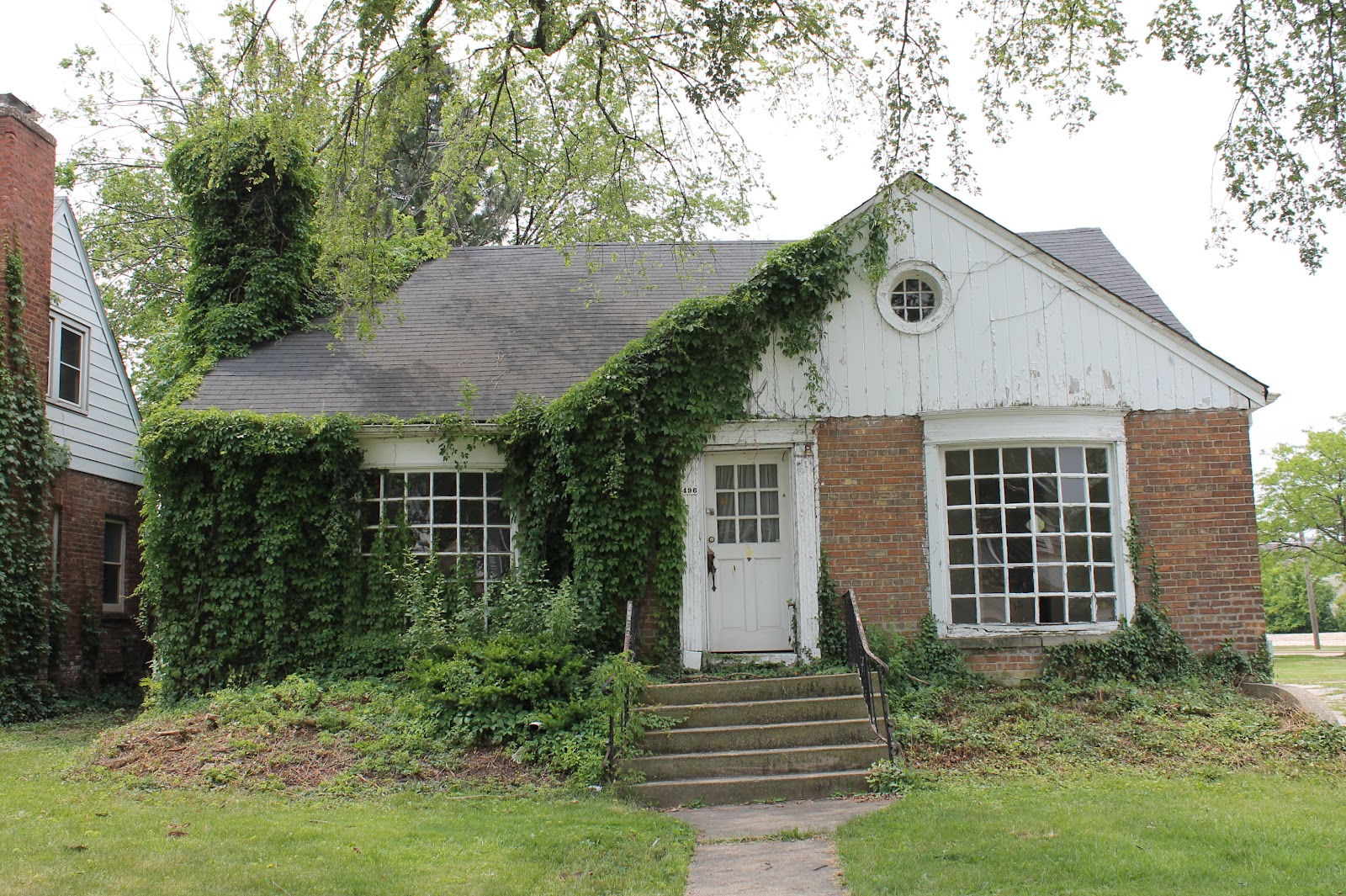
It feels like it's been forever since I've updated this site.  Mainly it's because my computer got sick and had to be taken to the computer hospital.  During the last two weeks I did a lot more reading, which was refreshing.  I always tell people that I could easily live without the Internet - though to be without the Internet I'd have to be deprived of all technology, save for my cell phone.  Put me up in UP Michigan, where the woods seem to never end, where cold clean water runs down rocky creeks lined with mosses, where one can be so alone in the wilderness that it's nearly a spiritual existence.  You can't hear any planes, and the road which runs past the house might host one vehicle every hour.  At night, the pitch black sky erupts in bands and clusters of stars and planets, and if you're lucky, the Northern Lights.  A place like this makes things like computers, ipods, tablets, and all that kind of stuff just obsolete.  However, I don't live there, but instead in my own little corner of Chicago, tucked away in just another early 20th century subdivision.  Down the street is the expressway, where the windy sounds of passing CTA trains make their way across streets lined with bungalows, maple trees, and (mostly) well-manicured lawns.  Directly above is a flight path for landing and outgoing airplanes, their ruckus by this point just ambient noise to this life-long city dweller.  Yes, in this environment, having Internet access is a good thing.  I like to share images of some of my outings, or in this case innings...because I feel that some of the images I post might relate to someone else who sees it.  Maybe not.  In the end, it's mostly for me, and if anyone else finds interest in what I do, all the better.

I'll begin with a shot of Dinkus Maximus of Flatulence (on the right) and Saki Moto Wasabi (on the left). From a dog-sitting stint while Aimee was in San Fransisco with her sister and mom.

Sunday, August 12, 2012

Ohio State Reformatoy, Mansfield

Some shots taken during our all-night lock-in at the decaying, "haunted" 19th-century prison, decomissioned and unused since 1990.

West cell block
If these bars could talk.
Q U O
Ghostly roll call
Bat.
When you've got to go, you've got to go.
The Life Extension Companion.
Lead & Porcelain

Saturday, July 21, 2012

DRCA III

Think of absolutely nothing.  Just listen.

Prairie crayfish (Procambarus gracilis)

Monday, July 16, 2012

Newts

With the Summer II semester comes a work-school-sleep-work-school-sleep schedule, but somehow I've got to find time to do my studying as well as my internship duties.  When I'm lucky, I get a few hours to just kind of let go a little and find things to do to take my mind off of everything that's crazy.  Like today.  Inspired by some photographers on Flickr who had photographed some local reptiles and amphibians, I set off for a new destination, further away from the city in hopes of finding some less disturbed natural areas in which I might come across something different from the usual Chicago fare.  Out in the burbs, I stopped by a familiar location I have known for years for its good fishing, but now armed with my camera I was destined to find something new here.  I found a path through some old growth woods and followed it for quite a distance, occasionally flipping bark at the prospect of finding a tough garter or Dekay's.  The heat wave we're experiencing is still steady but at least it rained pretty good the other day.  Still, the woods and prairie were dry and I came to the conclusion that anything there has holed up until better times.  However, I walked until I saw an opening in the woods some distance away, off the path.  Hoping it was a pond or wetland, I headed toward the light until I smelled the characteristic aroma of swamp.  The opening in fact turned out to be a sizable swamp in a clearing in the woods.  Most of the surface was thick mud, and 90% of the water surface was covered in green algae.  Big dead trees poked out every which way, and as I approached the swamp, I heard a chattering of alarmed frogs.  As I stepped out over the swamp on a log, a group of at least fifty young frogs darted every which way, yelping and chirping as they did so.  It was so funny that I had to laugh.  They would stop and freeze, and all I had to do was turn the camera on to make the clicking noise, and they all hopped away in unison.  I would tap my foot ever so lightly, and they would hop again.  This happened for a few minutes until the majority of the young frogs made their way off the mud and algae and into the water.  Since I am still using the stock lens I was unable to get any good shots of the frogs, but they ended up being bullfrogs anyway (I zoomed in on the photos to confirm they were bullfrogs on the computer when I got home).  I then decided to walk around the pond and in the surrounding wetlands and made a few surprising finds along the way, including some really cool newts (Notophthalmus viridescens louisianensis) and some assorted arthropods.  Here's some photos from the day.


The swamp (pronounced with a short "a", like in "stamp", like my ES professor).

Central Newts
This one made a break for it!
Making baby beetles
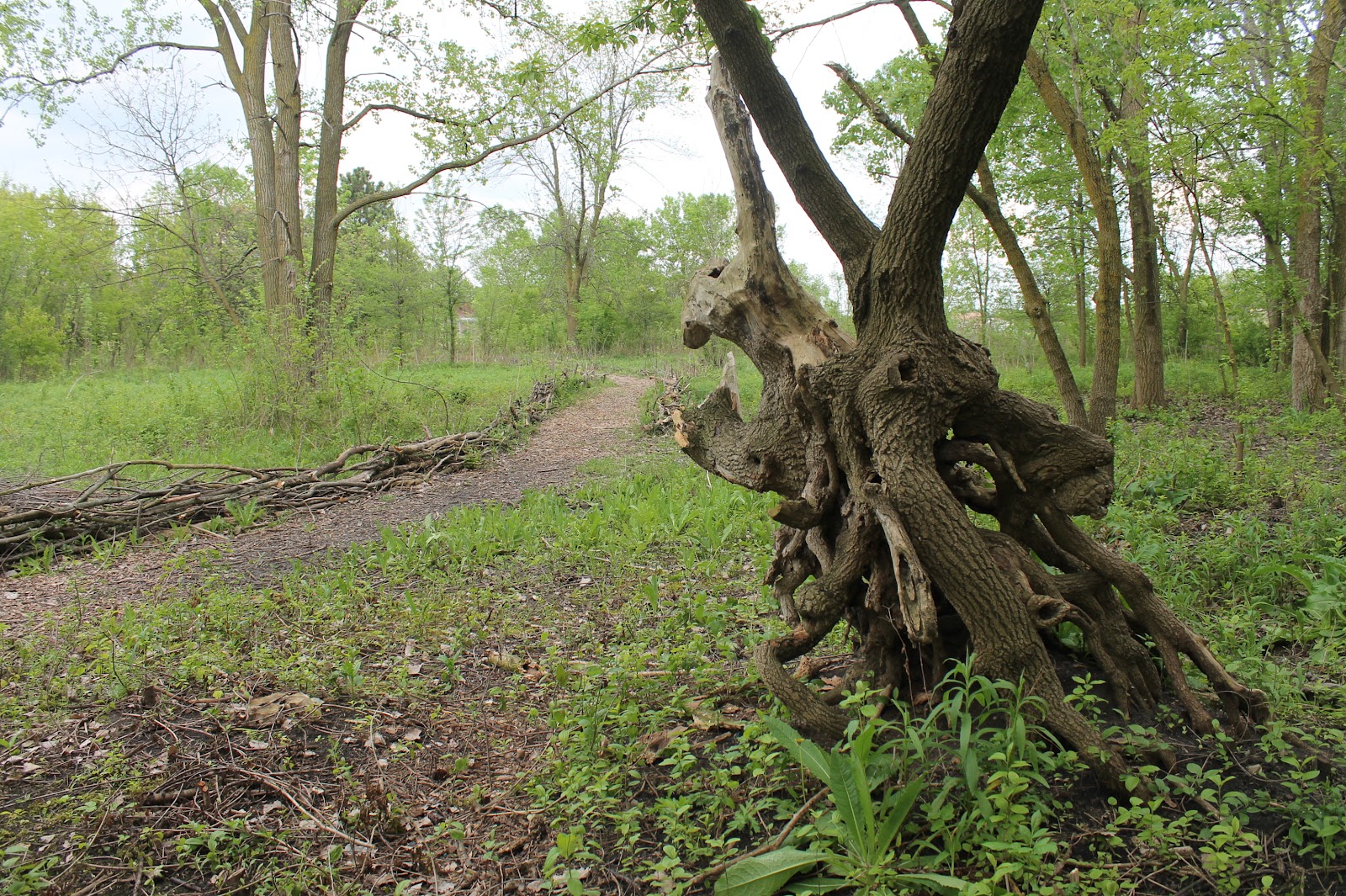
Massive tree down.
Harvestman
                                                                Bumblebee on teasel
Not sure what exactly this is...
Not out of the woods yet...


Sunday, July 1, 2012

DRCA II

I visited the RDCA today to gather information for my internship with FOTP.  Specifically, for clues as to how the local hydrology affects the prairie crayfish (Procambarus gracilis).  In the past I have seen countless crayfish burrows and chimneys, but this drought we are experiencing has forced the crayfish to stay deep within their burrows and cease additional excavation.  I did find a few old eroded chimneys and holes, but nothing to write home about.  One thing I have learned is that these animals are extraordinarily tough creatures.  Considering the source of water that feeds these wetlands, and the proximity of the crayfish to these wetlands, it is astounding that they can thrive and reproduce.  Their existence is crucial, as they are responsible for bringing nutrients found in the clay layer up to the surface.  Their burrows are also used by a variety of other animals, including several species of snakes, amphibians, rodents, and a host of invertebrates.  Today I noticed a small black rodent (a meadow vole?) scuttle into a dried-up crayfish burrow as I walked by.  Whether this was its home or whether it vanished into the nearest shelter due to my intrusion, I don't know.  Still, I'm sure those holes regularly save them from predation.

Just like my search for the Kirtland's snake seems impossible in this hot drought, any chances of finding these crayfish for analysis seem unlikely.  At this point, the only stimulus that could resurrect these crayfish would be a downpour.  I'll just have to wait until it gets cooler.  I think that's also when I will continue searching for the Kirtland's snakes.  Until then, there are a variety of insects in action in the prairie, as well as an explosion of plant life.  More invasive species were seen today, including blooming Queen Anne's lace (Daucus carota) as well as more wild parsnip.  The teasel (Dipsacus sp.) is out of control.  The good news is that some of the native plants are still fighting, and with increased restoration, over time this area can be an oasis for native grasses and wildflowers. 

Queen Anne's Lace

Young praying mantis
Squash bug
The prairie

Sunday, June 24, 2012

The Kirtland's Quest, pt. 1

I was tipped off to a location nearby that supposedly sustains a population of Kirtland's snakes (Clonophis kirtlandii).  I haven't seen one of these in a very long time, so I drove over there and took a crack at trying to find one.  The Kirtland's snake is quickly decreasing in numbers due to a number of factors including habitat loss and pollution.  It is listed as threatened in Illinois, but in reality it ought to be classified as endangered (it is endangered in several nearby states).  They aren't quite as tough as the Northern water snake (Nerodia sipedon) or most of the garters that are found in the area (Thamnophis).  While looking for one, I was reminded of another sad situation.  The frog situation looks gloomy - when all I see are bullfrogs (Rana catesbeiana) and nothing else; no green or leopard frogs, that's a problem.  Bullfrogs are not good indicators of a water body's health.  They have easily adapted to the sort of greasy, stagnant, runoff-tainted sludge that has killed off other species that simply aren't as hardy.  High levels of biochemical oxygen demand (BOD) and low dissolved oxygen have thumped the smaller frogs out of the picture.  I remember as a kid, walking along the edges of the local fishing ponds and lakes, occasionally brushing my foot across the tall grasses, watching all kinds of frogs jump into the water.  I would lose count of how many leopard frogs and green frogs I'd see.  These days, for the most part, all I can muster are a few rotund, grunting bullfrogs.  Which I suppose is better than nothing, but it shows how quickly an ecosystem can change at the hands of man.

I didn't find any Kirtland's snakes, but I did find a surprising array of other herp species.  I nearly fell into the water grabbing a neonate Northern water snake.  It was not happy being caught.  I used the Samsung today with the understanding that I'd probably get dirty and so the pictures didn't come out that great.  Still, another one for the 2012 list.  Aside from that, I spotted a young snapping turtle (Chelydra serpentina), a painted turtle (Chrysemys picta), a spiny softshell turtle (Apalone spinifera), the aforementioned bullfrogs, and a seemingly healthy supply of dragonflies and insects.  I also eyeballed a number of minnows, sunfish, and largemouth bass (Micropterus salmoides).  Oh yeah, and a big stinkin' dead muskrat, in all of its putrefied bloated glory.


Widow Skimmer (Libellula luctuosa)
Halloween pennant (Celithemis eponina)
A secret, sunlit opening in the canopy, supporting thousands of common arrowhead (Sagittaria latifolia)

Thursday, May 3, 2012

DRCA I

Wild parsnip (Pastinaca sativa)...don't touch.
The enigmatic boxelder.